
Skype for Business: Transforming Corporate Town Halls and All-Hands Meetings
If your team struggles with dropouts, unclear audio, or scattershot executive messages, that’s the buyer problem this article addresses. Running a reliable Skype for Business town hall means planning for the live audience in the room, the distributed viewers on the line, and the post-event recordings that leadership and HR will reuse.
Skype for Business town hall is still a productive option when teams need predictable meeting controls, Microsoft ecosystem integration, and an architecture that supports both Q&A and moderated discussions.
Below are practical, field-tested steps to move from a checklist to a dependable production: rehearsal, camera blocking, microphone selection, run of show, and recording handoff.
Ready to Elevate Your Corporate Video Production?
ICV Digital Media delivers professional video production, live streaming, and event coverage for Fortune 500 companies and regional teams nationwide. Book a free 30-minute strategy call.
What production teams should prioritize for Skype for Business town halls
Start with outcomes, not features. Define the executive approvals needed, the intended audience segments, and what success looks like for the recording handoff. Then build a run of show that aligns camera blocking, presenter cueing, and the Q&A flow to those goals.
- Rehearsal and speaker prep: Schedule at least one full run with presenters on the actual stage or in the same room as their webcam. Walk through visual cues, slides, and handoffs.
- Audio and fallback paths: Use a dedicated mixer or dual-path audio (local room mic plus Skype input) and test backup routing if the primary bridge degrades.
- Remote attendee experience: Verify captioning, chat moderation, and a clear Q&A process so distributed employees aren’t left out of the conversation.
- Recording and post-event: Confirm recording settings, storage location, editing watermark needs, and the timeline for the recording handoff.
Skype for Business features useful for town halls
Skype for Business supports large meetings, broadcast events, and meeting recording. For teams already on Microsoft 365, the platform’s calendar integration and contact management reduce friction when inviting VIPs and coordinating rehearsals.
But features alone don’t guarantee a good meeting. You need camera blocking, a clear stage plan, and a tech run that includes backup paths for audio and video.
Planning the transition to Microsoft Teams
Microsoft has moved most development into Teams. If you’re still on Skype for Business, map your current meeting features (recordings, participant limits, integrations) to Teams equivalents before you migrate so your run of show and technical rehearsals remain valid.
The migration path typically preserves contacts and meeting history, but don’t assume identical controls for live production — test your exact setup early.
Best practices for running the event
Concrete checks matter more than generic advice. Do a full tech run 24–48 hours before the event. Confirm slide control handoffs and camera blocking with every on-stage participant. Assign a moderator to vet chat questions and another producer to handle the recording handoff and captions.
- Run of show: Include timestamps, cues for lower-thirds, and who mutes/unmutes — and circulate it to presenters in advance.
- Camera blocking: Mark positions on stage and rehearse presenter movements so live cuts look intentional.
- Q&A and executive approval: Prepare answers to sensitive topics and confirm who has the final sign-off for script changes during the event.
How do you prepare speakers for a Skype for Business town hall?
Run at least one full dress rehearsal with each presenter on the final system. Cover timing, slide control, microphone technique, and camera eye-lines. Record that rehearsal so speakers can hear pacing and producers can capture notes for the final run.
How do you manage remote attendee experience and Q&A?
Assign a moderator to filter questions, a producer to queue answers into the run of show, and enable captions for accessibility. Test chat load and confirm how questions will be elevated to executives during a live Q&A segment.
What backup paths should be in place?
Always have at least two audio paths (room mix and redundant bridge), a secondary presenter laptop, and a plan to switch to an audio-only bridge or recording handoff if video fails. Document the switch procedure and rehearse it.
ICV production note
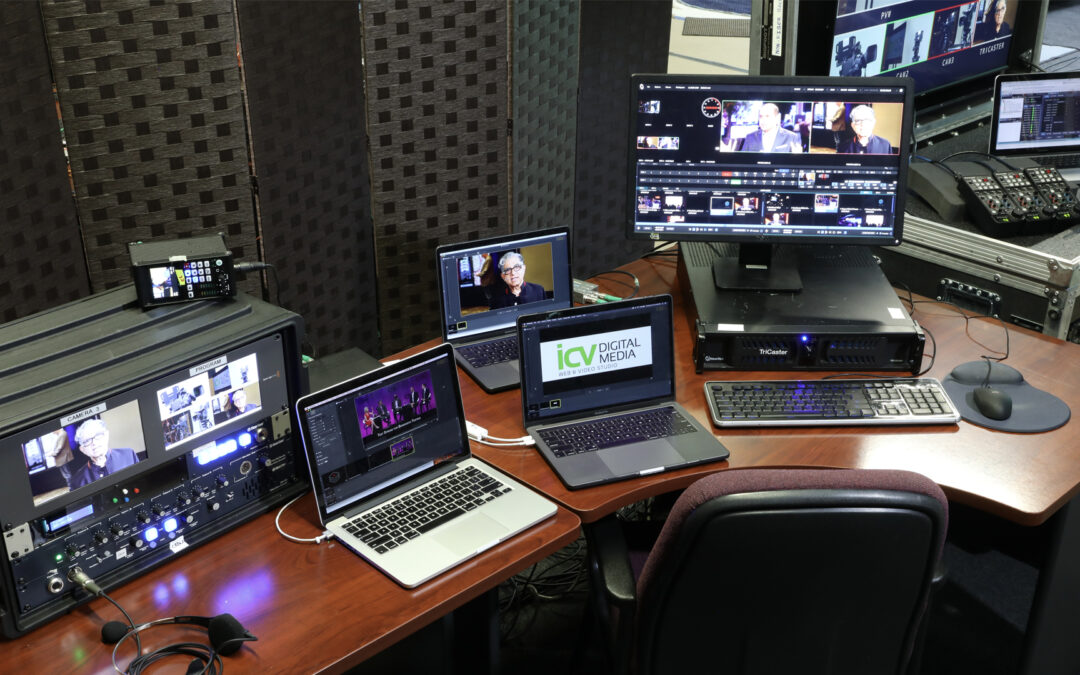
ICV Digital Media recommends a two-stage rehearsal: a technical run with producers to validate audio, camera blocking, and recording handoff, followed by a presenter run focusing on pacing and Q&A handoffs. In our experience, this split captures most issues early and keeps executive time efficient on the day of the event.
Professional production and next steps
For high-stakes town halls, bring a dedicated producer who owns the run of show, an audio engineer to manage levels and backup paths, and a recording technician to handle captions and the recording handoff. That lets leaders focus on the message while the team delivers a consistent remote attendee experience.
ICV Digital Media has produced Skype for Business and Teams events, handling producer duties, live moderation, and post-event recording delivery. Contact Us Today to discuss speaker prep, rehearsal scheduling, and sponsor deliverables for your next town hall.
Related ICVDM production resources
If this topic is part of an upcoming executive event, sales kickoff, town hall, or webcast, these ICVDM resources can help you plan the next step:
How ICVDM helps
ICVDM helps organizations plan and produce Skype for Business town hall projects with the strategy, technical production, livestream support, editing, and follow-up content needed to make the message clear and useful after the live moment ends.
Ready to turn this into a stronger executive video program?
Book a 30-minute strategy call
If you are planning town halls, sales kickoffs, leadership updates, livestreams, or a year-round video content engine, Imageinators can help map the production path, reduce execution risk, and identify the highest-leverage content opportunities.