
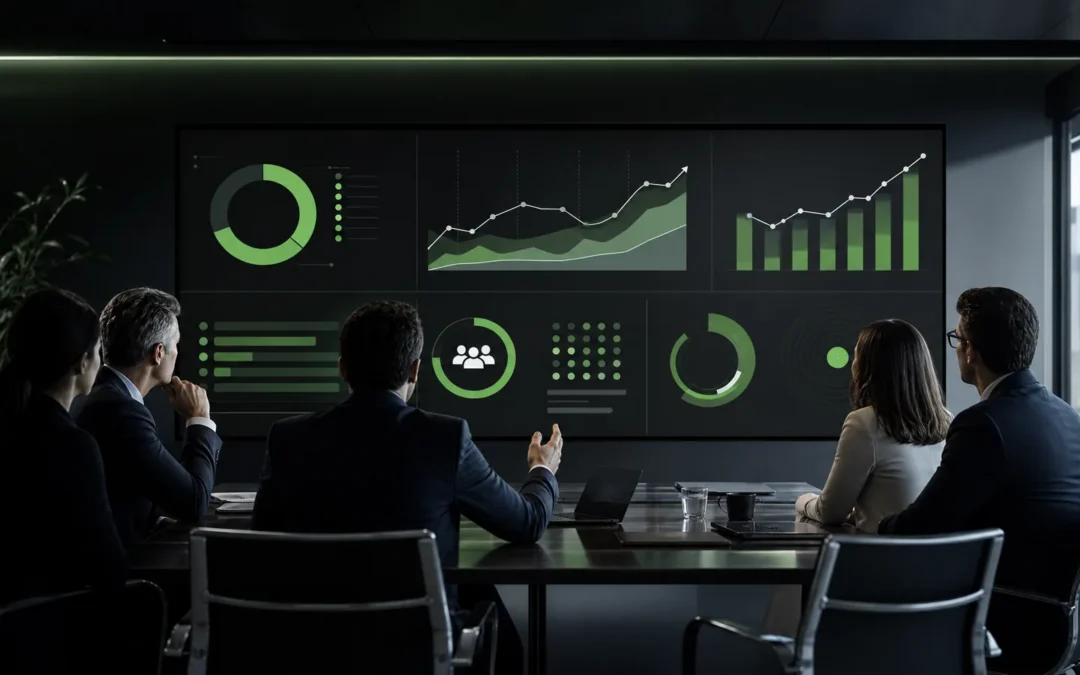
When finance asks, “What will this sales kickoff return?” they aren’t asking for applause counts — they’re asking for predictable, defensible outcomes. A sales kickoff can be expensive: venue, travel, executive time, content development, enablement, lost selling hours, and production. Those line items are easy to list; the harder work is building a measurement approach that ties the event to the behaviors and assets that actually move business.
Ready to Elevate Your Corporate Video Production?
ICV Digital Media delivers professional video production, live streaming, and event coverage for Fortune 500 companies and regional teams nationwide. Book a free 30-minute strategy call.
Sales kickoff ROI: what event teams should prioritize
Practical SKO ROI work happens in three windows: reduce friction before the event, protect the live experience during the event, and create usable follow-through after the event. Plan measurement at each stage so the CFO can see where value is being created or preserved.
Frequently asked questions about sales kickoff ROI
Why does sales kickoff ROI matter for corporate event teams?
Because the planning choices you make — what you rehearse, how you structure the run of show, whether remote attendees can hear and participate, and how you hand off recordings — determine whether the event becomes a repository of value or an expensive one-time meeting.
How should planners improve sales kickoff ROI before the event?
Confirm objectives, map the audience by role and priority, lock speaker prep and rehearsals, define technical requirements (audio, camera blocking, captions, backup paths), and design the replay and reinforcement plan. Build the measurement model before the event, not after it, so you capture the right data and create assets that are actually usable in the field.
How do you attribute pipeline influence to an SKO?
Attribution rarely sits on a single metric. Use a combination of replay consumption, talk-track adoption, manager coaching activity, and early pipeline movement. Tie those behaviors to time windows and cohorts (by role, region, or segment) so RevOps can look for changes that align with the SKO rather than generic seasonality.
What production steps protect SKO ROI?
Rehearse the run of show with speakers and technicians, do camera blocking for key moment transitions, confirm audio feeds for remote attendees, set up captions and recording handoff processes, and establish backup paths for streaming and file delivery. Sponsor deliverables and executive approvals should be confirmed in writing during production rehearsals so post-production can proceed without hold-ups.
A CFO-proof SKO does not promise perfect revenue attribution. It promises a defensible chain: who received the message, whether they engaged with it, whether they retained and practiced it, and whether commercial behavior shifted in ways the business values.
Stop measuring the SKO like a party
Attendance, satisfaction scores, and applause are useful signals, but they are surface-level. They tell you people were there and entertained. For ROI, you need signals tied to learning, reinforcement, and application.
- Attendance — shows presence, not impact. Better: attendance by role, region, and session priority so you can see who heard which messages.
- Satisfaction — captures sentiment, not behavior. Better: feedback tied to specific learning objectives and next-step commitments.
- Applause — reflects energy, not adoption. Better: replay usage, clips shared with managers, and coaching prompts completed.
- Session count — logs volume, not clarity. Better: priority sessions mapped to field actions and follow-up tasks.
- Recording availability — provides capture, not value. Better: tagged, edited assets with completion and search metrics and clear recording handoff to enablement.
Define ROI by business objective
Start with the business problem. If the objective is alignment, measure whether the field can articulate the top priorities and whether managers use the executive message in team meetings. If the objective is product readiness, track replay completion, knowledge checks, role-play participation, and early product attach behavior. If the objective is manager enablement, measure manager attendance, replay usage by managers, coaching guide adoption, and follow-up meeting completion. These are the signals that make SKO ROI credible.
Use replay analytics as an ROI bridge
Replay analytics don’t prove revenue but they do show whether content is being used. A structured library with search, tagging, and completion tracking lets you see which sessions are watched, which clips are useful to managers, and which topics need more reinforcement.
ICVDM’s Event Platform & Portal supports organized replay libraries instead of dumping files into an uncontrolled folder. Organizing content into role-specific clips, short how-to segments, and manager discussion prompts increases the chances that sellers will actually use the material.
Connect production quality to business value
Treat production as value protection. If executive messaging is muddled because audio was poor, or if remote attendees couldn’t see key slides, you’ve lost strategic impact. Clean audio, strong lighting, reliable streaming, and professional camera direction increase the odds the message lands live and remains useful later. Post-production that turns long sessions into role-specific assets turns event coverage into a content engine for onboarding, coaching, and product launches.
ICVDM’s Live Webcasting & Production and Video Production & Editing offerings focus on those exact handoffs: rehearsed run of show, clear recording handoff, captioning, and deliverables that enable enablement teams to act.
ICVDM production note: We always push for at least one full technical rehearsal and one dry run with speakers on camera. That’s where audio issues, camera blocking conflicts, slide legibility, and Q&A routing get resolved. Locking the run of show and recording handoff in the week before the event saves days of post-production rework.
Build a CFO-ready SKO measurement framework
Organize measurement into five practical layers so the conversation is specific and actionable.
- Reach — who attended or accessed the content (live attendance, remote attendance, replay access by role and region).
- Engagement — whether people participated (Q&A, polls, workshop participation, chat activity, session feedback).
- Retention — whether people remembered the message (knowledge checks, certifications, manager discussion completion).
- Application — whether people used the message (role-play completion, account plan updates, talk-track adoption).
- Business signal — whether commercial behavior shifted (pipeline hygiene, product attach rate, meeting quality, sales cycle movement).
This layered model lets executives move beyond “people liked it” and lets planners prioritize what to record, edit, and reinforce.
Make measurement easier by planning content capture early
Measurement depends on production choices. If sessions aren’t recorded cleanly, analytics are noisy. If content isn’t tagged or edited, sellers won’t find it. If remote engagement isn’t planned, participation data will be weak. If managers don’t get discussion prompts, reinforcement won’t happen. That’s why the event, enablement, and RevOps teams should align with the production partner on which sessions matter, which data points are realistic, and how the replay library will support follow-up.
A strong production partner does more than operate equipment. It helps protect the event’s value by building rehearsal time into the schedule, confirming backup paths, coordinating captions and recording handoff, and producing edit-ready files for enablement to use.
Next steps: get an SKO measurement framework review
If leadership needs a clearer way to justify SKO investment, ICVDM can help map the chain from production choices to measurable business outcomes. Get an SKO measurement framework review by contacting ICVDM—we’ll walk through your run of show, replay plan, and the data you need to show ROI.
calendly.com/icvryanrollins/30min”>30-minute demo link.
How ICVDM helps
ICVDM helps organizations plan and produce sales kickoff ROI projects with the strategy, technical production, livestream support, editing, and follow-up content needed to make the message clear and useful after the live moment ends.
References
Related ICVDM production resources
If this topic is part of an upcoming executive event, sales kickoff, town hall, or webcast, these ICVDM resources can help you plan the next step:
Ready to turn this into a stronger executive video program?
Book a 30-minute strategy call
If you are planning town halls, sales kickoffs, leadership updates, livestreams, or a year-round video content engine, Imageinators can help map the production path, reduce execution risk, and identify the highest-leverage content opportunities.
Plan a Better Corporate Event, SKO, or Livestream
If your team is planning a sales kickoff, leadership meeting, town hall, webcast, or hybrid event, use the form below to start a conversation with ICVDM.