
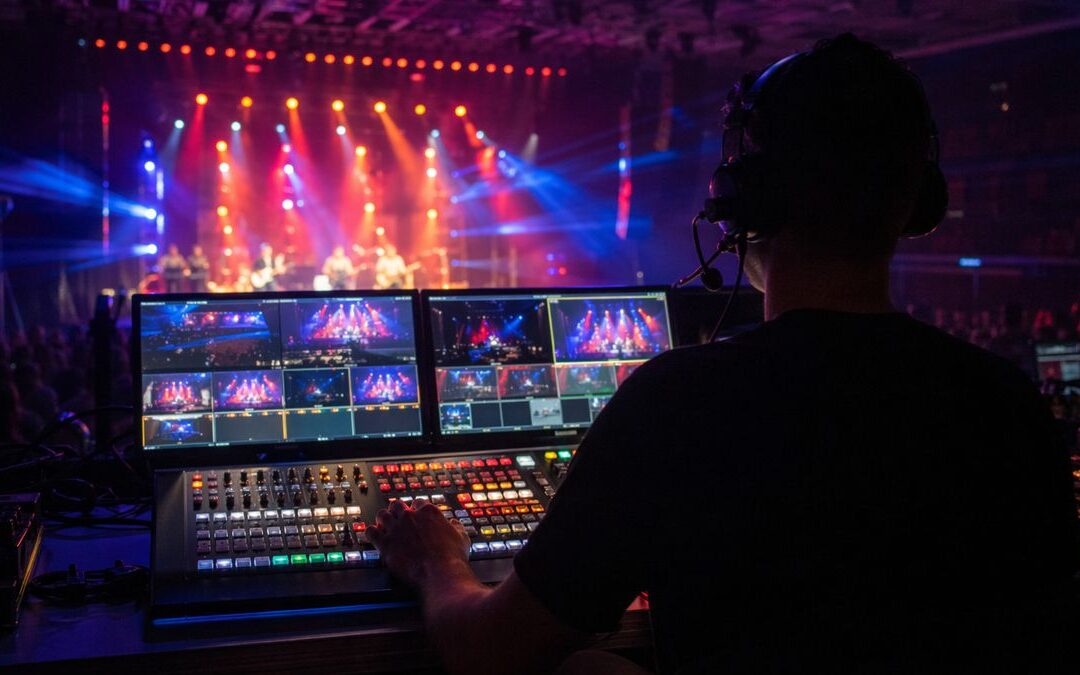
When a company invests hundreds of thousands of dollars in a corporate event, the footage captured during that event becomes one of its most valuable long-term assets. Yet on-site event videography is frequently treated as an afterthought — a single camera operator handed a vague brief the morning of the event.
Ready to Elevate Your Corporate Video Production?
ICV Digital Media delivers professional video production, live streaming, and event coverage for Fortune 500 companies and regional teams nationwide. Book a free 30-minute strategy call.
Defining the Shot List Before You Arrive
The foundation of great event videography is a detailed shot list created in pre-production, not improvised on the day. A professional shot list for a corporate conference typically includes:
- Hero shots: Wide establishing shots of the full room, the stage, and the audience at capacity
- Speaker coverage: Tight talking-head shots of every keynote speaker and panelist, captured on a dedicated camera
- Audience reactions: Genuine moments of engagement — laughter, applause, note-taking, networking conversations
- B-roll details: Close-ups of signage, branded materials, AV equipment, and the production team at work
- Candid moments: Hallway conversations, coffee breaks, and spontaneous interactions that communicate culture
Without a shot list, videographers default to wide, static shots that are nearly unusable in post-production. With a shot list, every minute of footage has a defined purpose.
Multi-Camera Coverage for Post-Production Flexibility
A single-camera event video is a documentary. A multi-camera event video is a broadcast. The difference in production value is enormous.
For corporate events, a minimum of three cameras is recommended. Camera one covers the wide master shot of the stage. Camera two captures tight shots of the speaker. Camera three is a roving handheld operator capturing audience reactions and candid moments. This three-camera setup gives the editor the raw material to create a dynamic, engaging highlight reel rather than a static recording.
Audio: The Most Overlooked Element
The most common mistake in event videography is relying on the camera’s built-in microphone to capture speech. In a large ballroom, this produces hollow, reverb-heavy audio that is nearly unusable.
Professional on-site event videographers always request a direct audio feed from the soundboard. This provides a clean, broadcast-quality recording of every microphone on stage, regardless of where the camera is positioned in the room. If a direct feed is unavailable, a dedicated audio recorder placed near the stage monitor is the next best option.
Repurposing Footage: The 12-Month Content Calendar
The ROI of professional on-site event videography extends far beyond the event itself. A single day of footage can fuel an entire year of content:
- Week 1: 60-second highlight reel for LinkedIn and Instagram
- Month 1: Full keynote recordings published to YouTube and the company website
- Month 2–3: Speaker clips cut into 90-second thought leadership videos for executive LinkedIn profiles
- Month 4–6: Training and onboarding videos assembled from session recordings
- Month 7–12: Teaser content promoting the next year’s event
By briefing your videography team with this content calendar in mind before the event begins, you ensure they capture every shot needed to execute this strategy.
Ready to Elevate Your Corporate Video Production?
ICV Digital Media delivers professional video production, live streaming, and event coverage for Fortune 500 companies and regional teams nationwide. Book a free 30-minute strategy call.