
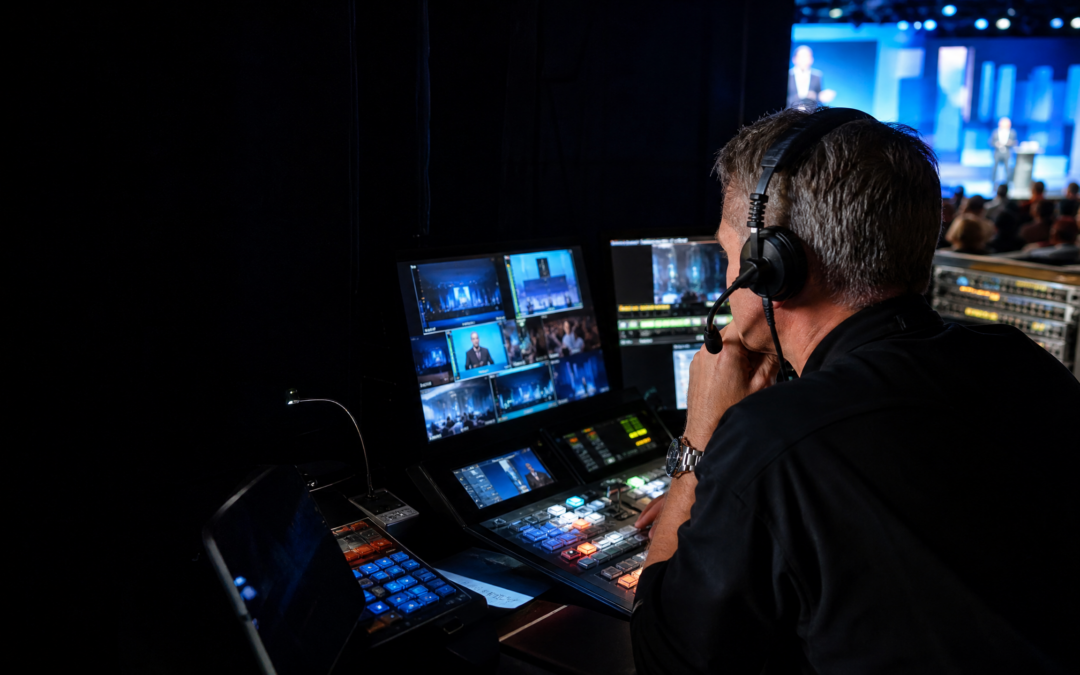
On-Site Corporate Event Technical Directors serve as the real-time nerve center for live corporate programs, translating rehearsed plans into flawless execution when the room fills and the agenda begins. Their role goes beyond equipment knowledge: they orchestrate live signal routing, instant troubleshooting, talent and client direction, and technical risk mitigation while balancing executive expectations. For internal communications and marketing teams delivering keynote sessions, panels, or multi-stage corporate showcases, an on-site technical director keeps audience experience, broadcast feeds, and venue systems integrated under pressure. This article outlines where their authority makes measurable differences during live moments, how they coordinate with producers and AV crews, and what planning choices ensure they can act fast and decisively.
In This Guide
- On-Site Corporate Event Technical Directors: Authority in Live Decision-Making
- Real-Time Signal Management and Redundancy for Corporate Programs
- Presenter, Talent and Client Interface During Live Cues
- Crew Communications, Vendor Coordination, and Chain of Command
- Rapid Incident Response, Compliance, and Post-Show Technical Handoffs
Planning an event with high stakes? Book a 30-minute consultation with ICV Digital Media.
On-Site Corporate Event Technical Directors: Authority in Live Decision-Making
During a live corporate program, on-site technical directors hold the authority to make immediate technical calls that protect the audience experience and the client’s messaging. They assess signal integrity, approve or reroute feeds, and decide when to override automated systems to address audio dropouts, stage lighting cues, or video playback failures. This authority is exercised in collaboration with the executive producer but must be decisive when milliseconds count. A designated technical director prevents delayed approvals from cascading into visible errors by assuming responsibility for live fixes, prioritizing safety and continuity. Their decisions are guided by predefined escalation protocols, redundancy plans, and real-time monitoring dashboards that consolidate audio levels, video formats, and network health for quick diagnosis.
Real-Time Signal Management and Redundancy for Corporate Programs
Signal routing during live corporate events demands immediate attention to format conversions, latency alignment, and backup paths. The technical director maps primary and secondary video and audio chains before the program starts and then continuously verifies that encoded feeds, projector inputs, and broadcast outs remain synchronized. They coordinate matrix switchers, frame-sync devices, and NDI or SDI converters, and they authorize rollovers to redundant encoders or power sources when a fault appears. In multi-stage environments, they sequence feeds to prevent cross-talk and ensure clean transitions between plenary and breakout stages. Because corporate messaging is time-sensitive, the TD also documents live signal changes and timestamps incidents, creating an actionable audit trail for speakers, legal teams, and post-event technical reviews.
Presenter, Talent and Client Interface During Live Cues
Technical directors manage the live interface between presenters, talent, and clients to preserve timing and brand delivery. They control in-ear monitor mixes, stage wedge levels, and confidence monitors so speakers hear timed cues and script revisions without distraction. The TD also authorizes lighting adjustments to favor on-camera talent, mutes live mics during sensitive remarks, and confirms that teleprompter speeds match speaker cadence. When a client requests a last-minute content change, the technical director evaluates latency impacts for playback and live feeds, then communicates viable options to producers and presenters. This real-time liaison role reduces miscommunication, keeps the program on-message, and ensures that any technical intervention is discreet and aligned with the production’s tone.
Crew Communications, Vendor Coordination, and Chain of Command
An on-site technical director establishes and enforces the communications protocol that keeps stagehands, lighting techs, AV vendors, and broadcast engineers synchronized. They select radio channels, set talkback priorities, and implement cue phrases so messages are clear without overloading channels during peak moments. The TD also mediates vendor handoffs, confirming who has control of shared systems and when overrides occur to prevent duplicated actions. Clear chain-of-command reduces latency in executing critical adjustments like mic swaps or projector reboots. Additionally, the technical director enforces safety standards around cabling and rigging during the program, coordinating with stage management and venue engineers to authorize any mid-show access to flown elements or power racks.
Rapid Incident Response, Compliance, and Post-Show Technical Handoffs
When something goes wrong during a live corporate program, the technical director must triage, contain, and resolve without distracting the audience. They run incident-play scenarios for power loss, RF interference, or unexpected software crashes and execute preapproved mitigation like hot-swapping servers or muting feeds while a fix is implemented. The TD documents every action in real time so compliance teams can review chain-of-evidence for sensitive content issues. After the final curtain, they lead technical debriefs, reconcile equipment logs, and hand off recorded assets with metadata to communications and legal teams. This disciplined closure minimizes operational risk and provides a clear record for future technical planning and vendor evaluation.
Planning Checklist
Use this concise checklist to convert the planning discussion into practical next steps.
- Confirm technical director authority and written escalation protocols before load-in.
- Validate primary and backup signal paths, converters, and power redundancy during the tech run.
- Conduct live incident simulations with the TD, producers, and key vendors pre-show.
- Require real-time logging and timestamped records of any live changes for post-show review.
Related Corporate Production Resources
Teams can also review ICV Digital Media’s AV equipment and technical production, locations we serve pages when defining scope, delivery requirements, and technical planning. When the outline is ready, request an estimate to discuss the production approach with an ICV producer.
The ICV Perspective
ICV Digital Media helps corporate teams turn complex programs into clear, broadcast-quality experiences. Our approach brings together production planning, dedicated technical execution, hybrid-event operations, and practical contingency planning so the event can serve both its audience and its business purpose.
Build a More Reliable Event Experience
Talk through your venue, production scope, hybrid workflow, and run of show with an ICV Digital Media producer.