
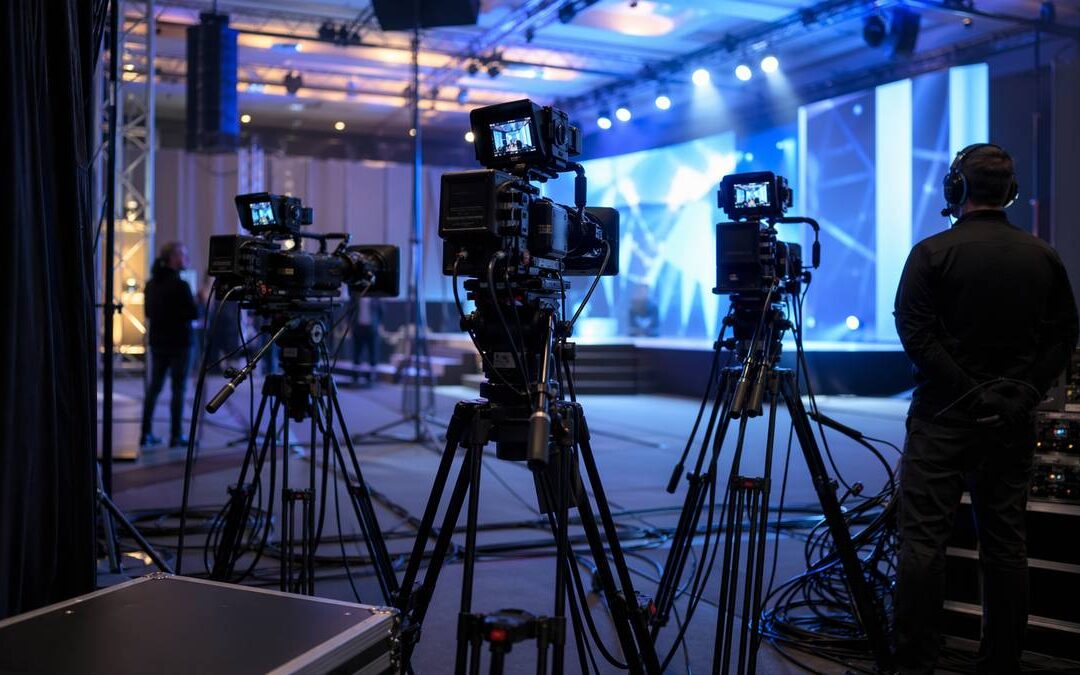
Corporate Town Hall Production: How to Make Leadership Messages Look and Sound Executive-Level
When leaders speak to the whole company, the message needs to land. Too often communicators wrestle with weak audio, bad camera blocking, slides that disappear on small screens, and Q&A chaos — all of which dilute a carefully written message. Good corporate town hall production is about removing those distractions so the audience can focus on what leadership is actually saying.
Production shouldn’t be theatrical. It should be practical: reliable audio, confident camera framing, readable visuals, clear transitions, and a run of show that gives speakers and moderators the space to do their jobs well.
Ready to Elevate Your Corporate Video Production?
ICV Digital Media delivers professional video production, live streaming, and event coverage for Fortune 500 companies and regional teams nationwide. Book a free 30-minute strategy call.
Why production quality changes the message
Internal comms teams are right to obsess over script and substance. But the room and the stream are part of the message. A CEO using an inconsistent microphone or standing in poor light will sound tentative even if the words are strong. Conversely, clean audio, camera blocking that favors eye line, and legible slides help listeners hear and trust the content.
Hybrid and virtual experience research underscores what production teams see on every job: audio first, then video, then interaction. Reliable livestreams, captions, rehearsal, accessibility, and a clear recording handoff are trust-building steps for remote and in-room audiences alike.1
| Production Element | Communication Impact |
|---|---|
| Audio clarity | Makes leadership easier to understand and more credible. |
| Camera framing | Creates presence for both in-room and remote audiences. |
| Lighting | Helps speakers look prepared, focused, and executive-level. |
| Slide legibility | Keeps strategy and data understandable on every screen. |
| Moderated Q&A | Shows that leadership is listening and organized. |
| Recording quality | Extends access for employees who cannot attend live. |
Build the town hall around the employee experience
Plan from the audience’s point of view. Employees want to know why the meeting matters, what’s changing, how decisions affect them, and whether their questions are being heard. Production should remove friction: clear sightlines and confidence monitors in the room; stable streams, captions, and a moderator for remote participants; and a quick, well‑organized replay for other time zones.
Practical details matter: speaker prep that includes mic checks and camera blocking, a run of show that allocates time for Q&A with canned contingency language for sensitive topics, and a defined recording handoff so post-event editors can create highlights quickly.
Treat Q&A as a produced segment
Q&A is often where credibility is won or lost. That doesn’t mean scripting answers. It means defining how questions get collected, who moderates, how duplicates are grouped, and how to surface remote questions. Use a moderator to bridge between speakers, and plan backup paths if a live question turns into a sensitive discussion.
Executive communications principle: The more sensitive the message, the more important the production structure becomes.
Rehearse the moments that matter
Rehearsals need to feel like run-throughs, not checkbox mic checks. Walk entrances and exits, practice camera cues and slide timing, run video playback once at speed, practice handoffs during panel seating, and time the closing so messaging lands on schedule. Let executives say lines out loud — dense slides and awkward transitions reveal themselves in rehearsal.
Include the moderator and any panelists. Cover contingency scenarios (audio failure, a late-breaking question, a remote attendee drop) so staff know the backup paths and who makes which decision under pressure.
ICV production note
On site, we always run at least one full dress with the actual laptop and playback system that will go live. Camera blocking in the rehearsal often changes speaker positions by a few feet and that difference fixes framing, eyelines, and confidence monitors — small moves with big impact on how an executive reads on camera.
Capture content for follow-up
Decide ahead which segments should become clips, and mark them in the run of show. Capture multitrack audio if possible so editor teams can produce clear executive highlights. Add captions and a timestamped transcript to speed findability, and plan a recording handoff that includes notes about which shots and segments are priority for post-production.
| Post-Event Asset | Best Use |
|---|---|
| Full replay | Employees in other time zones or on different shifts. |
| Executive highlights | Reinforcing strategy and culture messages. |
| Q&A clips | Addressing recurring employee questions. |
| Transcript | Accessibility, searchability, and internal documentation. |
| Manager recap video | Helping team leads cascade the message consistently. |
What should I prioritize in corporate town hall production?
Start with audio, clear visuals, and a run of show that includes rehearsal time. Make remote experience and captions non-negotiable. Prioritize the capture workflow so you can hand off a clean recording and metadata to editors immediately after the event.
How long should rehearsals be and what needs the most attention?
Plan at least one full dress rehearsal of the full run of show; for multi-speaker or sensitive town halls add a separate camera-blocking pass. Focus on entrances, slide transitions, video playback, speaker handoffs, and the moderator’s Q&A flow — these are the moments that most often break during a live broadcast.
How do we support remote attendees effectively?
Use a stable streaming platform with captions and a clear moderator role for chat and raised questions. Give remote participants visible ways into the conversation (moderated chat, live polls, or a Q&A tool), and post a timestamped replay with chapters so people in other time zones can find the parts that matter to them.
Final recommendation
Treat a town hall as a broadcast with internal stakes. Put production plans into the same project management flow as the messaging: executive approval checkpoints, rehearsal schedule, sponsor deliverables, backup paths, and a recording handoff. Those practical steps let leadership focus on the content while production makes that content easy to hear and trust.
If your team is planning a quarterly town hall, leadership update, or hybrid executive communication, ICVDM can help produce the event from planning and rehearsal through livestreaming, recording, and post-event content.
Work With ICVDM
If this planning question is active for your team, contact ICVDM to map the right production plan before your next corporate event, town hall, livestream, or sales kickoff.
How ICVDM helps
ICVDM supports planning and technical production for corporate town hall production projects, including run of show development, speaker prep, rehearsal, livestream support, captioning, and edited post-event deliverables. We focus on the production details that keep leadership messages clear and reusable after the live moment.
calendly.com/icvryanrollins/30min”>Book a 30-minute ICVDM production consultation to discuss the production needs, risks, and next steps for your corporate event.
Ready to turn this into a stronger executive video program?
Book a 30-minute strategy call
If you are planning town halls, sales kickoffs, leadership updates, livestreams, or a year-round video content engine, Imageinators can help map the production path, reduce execution risk, and identify the highest-leverage content opportunities.
Plan a Better Corporate Event, SKO, or Livestream
If your team is planning a sales kickoff, leadership meeting, town hall, webcast, or hybrid event, use the form below to start a conversation with ICVDM.