
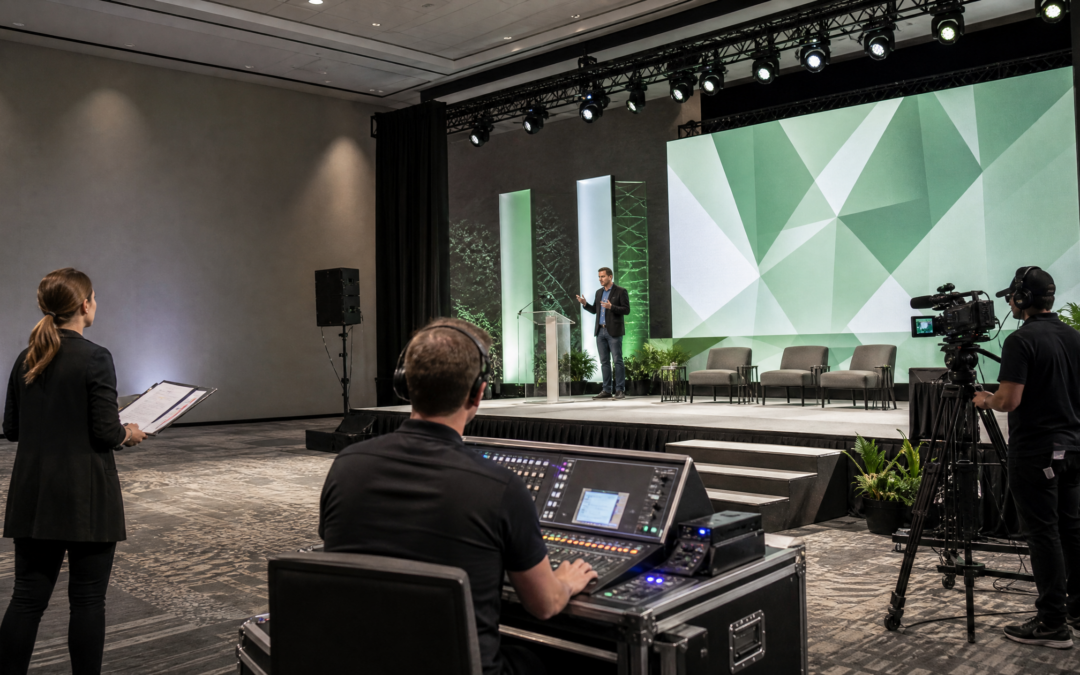
Full support for a corporate live event in the Bay Area starts with technical strategy and covers production design, engineering, local logistics, and onsite crew orchestration. Live corporate event production services in the Bay Area pair creative direction with systems-level planning: site surveys, signal and power schematics, redundancy plans, and content playback architecture. For internal communications, product launches, and executive forums, this full-support model coordinates vendor suppliers, local permitting, and venue-specific build requirements while establishing a single technical command structure. The approach reduces fragmentation between creative intent and engineering execution so teams can focus on messaging and attendee experience while production handles the technical complexity.
In This Guide
- Live Corporate Event Production Services in the Bay Area: Scope
- Pre-production engineering and technical systems integration
- Onsite command centers, crew orchestration, and technical coordination
- Venue and neighborhood coordination specific to Bay Area sites
- Contingency engineering, redundancy, and post-event workflows
Planning an event with high stakes? Book a 30-minute consultation with ICV Digital Media.
Live Corporate Event Production Services in the Bay Area: Scope
An end-to-end Bay Area production engagement defines responsibilities from creative concept through load-out. Core elements include production design and scenic integration, technical engineering for audio, lighting, and video, content engineering and playback systems, and a documented installation and de-rig plan. It also covers supplier sourcing and bidding, local site reconnaissance, logistical staging of load-in and strike, and coordinated scheduling with venue operations. The scope document assigns single points of technical authority, details staging footprints and rigging capacities, and specifies network, power, and backup systems. Establishing this scope early reduces on-site surprises and creates a clear chain of command between client stakeholders and the technical production team.
Pre-production engineering and technical systems integration
Pre-production engineering turns creative requirements into executable technical plans. Engineers produce signal-flow diagrams, power and grounding maps, equipment lists, and CAD drawings for rigging and cable runs. Network architecture is designed to prioritize deterministic audio and video streams, integrate redundancy, and segment control systems from guest Wi‑Fi. Vendor equipment specifications and spare-part lists are finalized, and manufacturers’ tolerances for venue installations are verified. Pre-rig tests, factory acceptance checks, and pre-wiring schedules reduce discovery work onsite. This coordinated planning establishes handoff documents for the load-in crew, a checklist for technical rehearsals, and measurable criteria for lighting and audio coverage so the production scales predictably across Bay Area venues with differing infrastructure.
Onsite command centers, crew orchestration, and technical coordination
On site command centers provide real-time control and a single point for technical decision-making. A production command includes technical director, lead audio and video engineers, stage manager, and a network operator who monitor feeds, comms, and system health. Clear radio protocols, shared digital call sheets, and a physical watchboard for incident tracking keep teams synchronized across load-in, rehearsals, and performance. Production meetings before each phase assign contingencies for cue failures or content swaps, and authority lines are enforced so rapid technical fixes don’t interfere with creative direction. For large Bay Area corporate events, temporary fiber paths, local signal relays, and mobile power distribution are staged from the command center to minimize latency and maintain consistent audience experience.
Venue and neighborhood coordination specific to Bay Area sites
Bay Area venues vary from refurbished warehouses to university auditoriums and municipal spaces, each with unique permitting and neighborhood considerations. Production teams coordinate with venue engineers, local permitting offices, and municipal services to schedule load-ins, deliveries, and street permits when needed. Noise ordinances, neighboring tenants, and transit restrictions inform staging times and power placements; early engagement prevents late-stage work stoppages. Local vendor relationships help source labor and equipment when tight city logistics limit large vehicle access. Security plans are adapted for corporate guest lists and credentialing, while liaison staff manage parking, shuttle staging, and last-mile logistics so technical crews can proceed without administrative delays seamlessly
Contingency engineering, redundancy, and post-event workflows
Contingency engineering plans anticipate equipment failures, network interruptions, and content discrepancies to preserve event continuity. Standard practices include mirrored media servers, audio and video signal path redundancy, duplicate control consoles, and hot-spare racks staged on-site. Power redundancy and UPS for critical systems, tested switchover procedures, and pre-authorized vendor escalation paths shorten recovery windows. Post-event workflows capture system logs, recorded program masters, and asset inventories for reconciliation and lessons learned. Technical closeout includes cable labeling, equipment condition reports, and a formal debrief with facilities and client technical staff to document adjustments for future runs. This structured approach protects program integrity and accelerates teardown and equipment return in complex Bay Area productions.
Planning Checklist
Use this concise checklist to convert the planning discussion into practical next steps.
- Schedule a venue-focused site survey with power and rigging maps at least eight weeks prior to load-in
- Finalize signal-flow diagrams and spare-part lists and distribute to technical leads before pre-rig
- Establish an onsite command center with clear comms protocol and designated escalation paths
- Document post-event asset inventories, recorded masters, and a formal technical closeout report
Related Corporate Production Resources
Teams can also review ICV Digital Media’s AV equipment and technical production, locations we serve pages when defining scope, delivery requirements, and technical planning. When the outline is ready, request an estimate to discuss the production approach with an ICV producer.
The ICV Perspective
ICV Digital Media helps corporate teams turn complex programs into clear, broadcast-quality experiences. Our approach brings together production planning, dedicated technical execution, hybrid-event operations, and practical contingency planning so the event can serve both its audience and its business purpose.
Build a More Reliable Event Experience
Talk through your venue, production scope, hybrid workflow, and run of show with an ICV Digital Media producer.